
3. THE ELUSIVE SAM GALLIGAN, SIDE PROJECTS, THE POST SOCIAL SPEED ROUND, FINAL WORDS AND PARTING THOUGHTS
During the entire duration of this interview project, I had
hoped to somehow connect with Post Social Bassist Sam Galligan. While I did
meet him on Record Store Day, he was indeed a reticent figure and one who
proved to be entirely unreachable once this project began and continued in
earnest. So, it was of course obvious to ask Shannon, Brendan and Mitch about
their lifelong friend and bandmate.
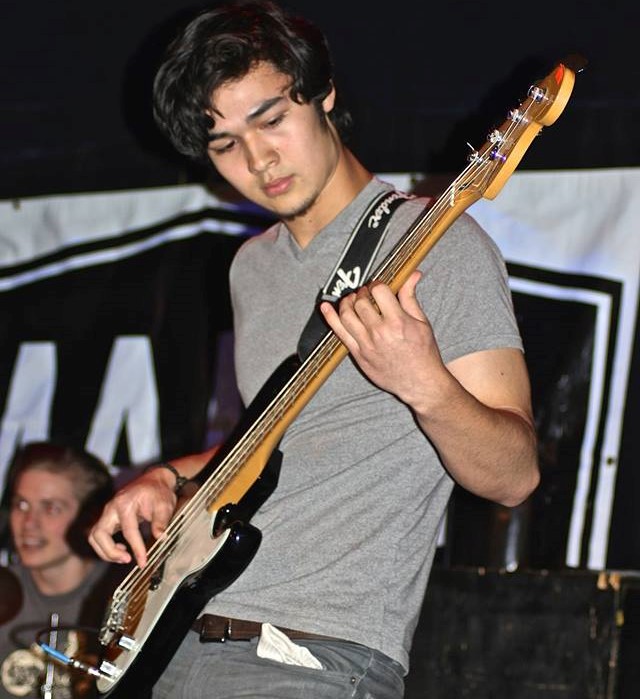
Sam Galligan has been conspicuously absent from this project.
What do you feel is Sam’s greatest strength within Post Social?
BRENDAN: It is a well-known fact by now that Sam does
not exist on Facebook. I'm sure you've gotten the butt end of that reality. It
is the perfect metaphor though, and also the reason why it is so hard to answer
that question. Sam is the most mysterious man I know. It would be along
impossible to predict what he would say about us or how he would answer any of
your questions. I do know without a doubt that he loves playing his instrument
and he loves being a part of this band, as do the rest of us. Sam's biggest
strength is his ability to craft basslines that sneak up on you. By that, I
mean you may not be particularly interested or impressed by it at first, but
after it settles in your head, it doesn't leave. They often take time to be
fully realized.
SHANNON: Sam has a lot
of really inventive and unconventional basslines, and he gives songs a
completely different vibe once he plays on them. I think his biggest strength
is his ability to completely alter a song for the better. I did a one-off song
last winter called “Concepts” that
he played bass with me on, and he completely made the song.
The
original idea I had was that it would be a really sloppy and simple song, and
even though it still was after he wrote his part, he gave it this energy that
it didn't have and it turned into this super funky punk song.
MITCH: I love and respect all the guys in our band. I am humbled to be playing and writing songs with all of them. They are all amazing musicians. But, Sam is the best of us all. It might not seem like it when you meet him, but this man is everything to our band. He is the most versatile of all of us. He has an intense passion for music that I can honestly admit surpasses mine. He is brilliant at crafting melodies, he can write an amazing bass line to any guitar riff you throw at him, and every time I bring a song idea to the band, I might at first be skeptical of Shannon’s and Bren’s parts but Sam instantly knows exactly what the songs needs bass wise and it's truly incredible.

MITCH: I love and respect all the guys in our band. I am humbled to be playing and writing songs with all of them. They are all amazing musicians. But, Sam is the best of us all. It might not seem like it when you meet him, but this man is everything to our band. He is the most versatile of all of us. He has an intense passion for music that I can honestly admit surpasses mine. He is brilliant at crafting melodies, he can write an amazing bass line to any guitar riff you throw at him, and every time I bring a song idea to the band, I might at first be skeptical of Shannon’s and Bren’s parts but Sam instantly knows exactly what the songs needs bass wise and it's truly incredible.
This wasn't always the case, because early high school, just
before we started writing PS 1 songs, Sam was no doubt the least enthusiastic
about our band. But, something clicked and he was the one dogging us about
scheduling practices all the time and you could hear in his bass lines he had
suddenly gotten really fucking passionate. I hope listeners can hear all this
in his lines on PS1, because I certainly do. And when our new album comes out,
I beg every listener to concentrate on Sam's parts because they are too
brilliant to go unnoticed. When it comes to talking publically about our band, Sam
usually takes a back seat. He has a lot to say, but he always lets the bass do
the talking.

I have always found it fascinating to think about
how much actual music exists within a band and its members. Like when a member
departs and crafts a solo project or begins an additional band. I am also of
the understanding that all of you are involved in several side projects. Is
that true?
MITCH: I make electronic music under the name "Hypnopaedia" (A
Brave New World reference) and have a mixtape and an EP up on Soundcloud.
But I'm looking to maybe do some solo stuff this fall if I can find the time.
That's about it.
Shannon, can you tell us about “Wayne”?
SHANNON: Wayne is an alias I release music under occasionally as an
outlet for my guitar songs that don't make it to the band. It's pretty
inconsistent and I've slowed down with it recently, but I've been trying to put
together an album since last year. We'll see if that ever happens.


And Brendan, you are certainly extremely busy as you have also
been performing as the drummer for Madison’s Modern Mod. How did joining that
band come to you?
BRENDAN: I
believe Emily Massey (Modern Mod lead
singer/guitarist) was the reason I became involved in Modern Mod. Emma “Ronnie” Clarke (former Modern Mod drummer) and Max Werner
(former Modern Mod guitarist) were leaving the band for school so they needed a new drummer. Post
Social had played with Modern Mod in a few sets already so they knew who we
were, but Emily knew me personally from East High. They must've decided I was
the right fit! *Fun Fact* -They originally wanted both Shannon and I to play
with them to maintain the 5 member line-up.
What are the similarities and differences to
performing with both Post Social and Modern Mod for you? Is it difficult to
juggle the time and energy with both bands?
BRENDAN: I
think the most apparent difference in experience would be the size and interest
level of each audience. Fans of Modern Mod are plentiful and thirsty, while
fans of Post Social are fewer but no less loyal. It seems near impossible to
sum up my experience with both concisely; I apologize for not being able to
answer that very well.
It's
always tricky to find the time in a day to achieve everything I'd like to, but
playing with two bands is hardly a chore. I love every moment I can get playing
drums in a band! It's also a myth that one needs to split their creative energy
between two projects. Since they are two different projects, you're taking
energy from a completely different source. Modern
Mod provides a priceless amount of live show experience. I feel like I've grown
as a performer since joining that band, and am much more comfortable on stage
to boot. Post Social provides nearly everything that I love about being in a
band: jamming, songwriting, recording and experimenting, and having a ton of
fun with it all. My new project with Alivia
Kleinfeldt (Modern Mod co-founder/bassist/singer) lets me focus solely on
songwriting and arranging, and in the end, creating a piece of art. This is the
project where I feel I can be the most creative and have the most control over
what I'm making, which is so being valuable to me. Everything else musical is
more or less just for fun, playing around with Wayne songs or hopping on FL
Studio and making a trap beat for the hell of it.
Shannon, regarding Wayne, what is the most satisfying aspect of
creating music away from Post Social?
SHANNON: When we're writing songs in Post
Social, a lot of editing and refining happens when a song is brought to the
table. It's completely different from what it's going to be in the end. Also, in Wayne and my other music, I can change things
really fast and/or drastically, and there's no one to ask permission or warn.
That's kind of nice to have, but I think that it also ends up hindering me
because I tend to make dumb decisions right before I put out my own music, like
adding a keyboard part that doesn't really need to be there or stripping things
down too much. I think the most satisfying part of it for me is I have the
chance to make stuff that's a bit more personal, and I can have my own vision
that can stay alive for the entire process. Also I can play keys more, play
drums, bass, guitar…all of that is probably the most rewarding.


And now, I wanted to give the members of Post Social a slight
break from just speaking about themselves so exclusively. Now, I am pleased to
present the “Speed Round” where Shannon, Brendan and Mitch speak a tad more widely
about music itself, from their personal preferences and even some dislikes.
Who is your favorite artist or band and why?
BRENDAN: It goes without saying that this question is painfully
difficult to answer as asked. Just way too hard to narrow it down, but Wilco has been a part of my life for as
long as I can remember and I adore everything they've done. They have perfected
the art of blending classic and accessible songwriting with textures and ideas
most have never heard, while maintaining a kind of musicianship I envy so much.
MITCH: Favorite band
is probably The National. They put
on the best concerts I have ever seen (once at the Orpheum and once at Eau
Claire Fest) All of their albums really creep into me. They craft amazing
melodies that get stuck in your head, and have a certain mysterious aura, and I
cannot explain why it is appealing, but it is.
SHANNON:
I don't think I could really ever
pin down a favorite artist. I was definitely really into Real Estate and Mac Demarco
in high school. Also Elliott Smith and
R.E.M. If anything on our album
comes across as a Real Estate ripoff, it's my fault. We’re trying to distance
ourselves from that sound a little bit on the next album.
Who do you feel
is a most underrated artist?
MITCH: I'm
honestly not sure about most underrated or overrated artists... Obviously there
are many, many, artists that are mega famous that I would like to say don't
deserve the attention but that's simply because I don't like that style of
music. My philosophy on music is that, if someone can connect with style of
music that I can't, it's still a valid artist or album or song. The fact that
an artist, album or song makes another person feel the same happiness that I
feel when I listen to the music that I like, is completely validating.
BRENDAN: In
the hours I've spent surfing Bandcamp
I've found quite a few great things, but my favorite discovery has to also be
my vote on most underrated artist. Stephen Steinbrink is quite simply a
songwriting genius. I struggle to find words to praise him, I just urge you to
listen to his music.
SHANNON: For
me, Weezer is a very underrated
artist for my generation specifically. I think lots of people my age tend to
remember them for the song "Beverly
Hills,” or the albums they've done in the last 10 years. I don't think
everyone my age is tuned into Rivers
Cuomo's sense of humor. He is a genius and I think he just got bored with
the original Weezer sound and tried really hard to make them a pop band, which
I think is funny and I respect him for. “The
Blue Album” and “Pinkerton” are
some of the best albums ever, and some people don't get to see that side of Weezer
because of their own misconceptions about them as a band. “Pinkerton” is also a “desert island album”
for me. I think Mitch hates Weezer and my goal is to get him to like them
someday.
Oh,
also another EXTREMELY underrated band (Slept on) is BALKANS from Atlanta. They disbanded a few years ago before they
could really get off the ground. They sound a lot like The Strokes but I like them more than The Strokes.
A more "current" underrated artist that I have to
mention is Alex G. He's like 22
years old and he is a songwriting genius. He has back catalog on his Bandcamp
all the way from 2009, which would be from about his junior year in high
school. I got into him from his album “DSU”
and listened through his entire discography and loved it all. His album “Winner” is probably my favorite of his
older stuff. I highly recommend checking him out if you like kind of shoegazey
angsty music.
How about an artist you feel is overrated?
How about an artist you feel is overrated?
BRENDAN: Dave Matthews. My lack of appreciation of Dave Matthews is
pretty shallow so I won't be able to give you a very good explanation. He
managed to get so popular with songwriting that seems so uninspired, like his
only goal is to rake in more money.
SHANNON: Most overrated artist has to be
either U2 or Coldplay. I love early U2, I just don't think their output
past the 90's has deserved the acclaim it has gotten. My Mom played the album “How To Dismantle An Atomic Bomb” to
death and it left a sour taste in my mouth.
I could imagine that U2 for you is like what
The Rolling Stones right now are for me.
SHANNON: Accurate. I think younger people are more
cynical about U2. I think it just happens the longer a band stays around.

Which musical trend do you feel needs to quickly vanish?
BRENDAN: Contemporary Country and Rap fusion is the worst thing to
plague this planet.
MITCH: I
think a musical trend that needs to go away is artists who make albums so
utterly digital in a way so that their shows are terrible. It seems like a
golden rule to me to never make your album sound better than you could play it
live. But, I've seen a lot of shows where that rule is broken, sadly enough. A
musical trend that has come out of the negative side of digital records is the
cool and innovative way artists can have of performing very digital stuff live.
Some people just play an instrumental and sing/rap over it which will always
sound worse live than on the studio version. But some artists have really cool
live interpretations of their music played differently with instruments, synths
sample pads and it's a fresh live experience from the album, which can be rare
but really cool when you see it.
SHANNON: As far as
musical trends go, there aren't really I can identify that bother me. I think Autotune
got a lot of unfair backlash because it was supposed to destroy
"real" music. But I really liked how Bon Iver used it on his self-titled album, which is another desert island
album.
I
think the only trend I want to go away is the trend of trying to make
"real" music by using old recording methods or posturing oneself as a
more "real" musician because of their aesthetic choices. I'm all for
older recording methods and we're recording our album on a 4 track cassette
machine right now, but something I hear a lot now from older people in the
music world is that the way they did things was more authentic. A lot of people
are against recording onto a computer because it's not punk enough, but I think
what punk is all about is utilizing the resources you have available, which for
my generation is a laptop and an audio interface.
Another thing that bothers me is that people are afraid of
progress in music. I think the 80's were a time when music technology was being
pushed to the greatest extent, and people wanted to have synths and gated
reverb and all this studio magic on their songs, and then after the backlash
from that happened, the response was to strip back to simpler stuff. Which makes sense, because you never want to overdo it, but I
think it's a shame that we aren't more supportive of all the technology we have
on our hands to make music with.
I
think people are afraid of making music that sounds dated. People are more
concerned with going back to the past than finding a new sound. I think the
best thing is always keeping an open mind.
That is a very intriguing answer to me because
as a fan/listener, I have lamented for years about the lack of "new
sounds" especially as the 50s-90's had so much innovation and
transformations. So much of what I hear today feels derivative in some
respects. But at the same time, I love those sounds from the past. Not in that
Jack White fashion which can be so self-important. But, in the way where the
music sounded...warmer, I guess. I love those dry drums sounds, those analog
synths, the Fender Rhodes keyboards...that sort of thing. Shannon, do you feel
that the music of hip-hop has shown more sonic openness than rock and roll?
What could rock learn from hip-hop and electronic music?
SHANNON: I
don't want to try to speak for the entire rock genre because obviously there
are plenty of innovative and exciting bands, but I do think that the worlds of
rap and electronic seem to be more focused on progression right now. I think
simplicity will always be great, but I'm not afraid to branch out into the
world of sampling and computer editing and all that stuff. I think there's a lot of great things waiting to happen. My main
argument here is really against the Jack
White school of thought, which doesn't hold a lot of ground in other genres.
Which musical
trend would you like to see make a grand return?
BRENDAN: It
would be my dream to have big band jazz like Count Basie hit top 40. Jazz in general is dying out in popularity
so is love to see a resurgence.
Really? What is your
personal/emotional connection to jazz? What speaks to you about the genre?
BRENDAN: When I was a very small toddler, my parents often took me to
jazz and avant garde jazz shows. They've told me that unlike a normal toddler,
I sat and watched intently every player. My magnetism towards the genre hasn't
changed since then; I still find every aspect so fluid yet calculated and just
so enthralling.

We’re almost at the end. Could you please tell
us what it means to you to be a working musician in Madison? What are the pros
and cons?
SHANNON: The best part by far about being a performing musician in
Madison is the community of college students who have a demand for music. But, Madison unfortunately seems to be a city that's
dominated by more "hobby bands" that might play little free festivals
a lot of the younger bands that take themselves more seriously usually die
or leave Madison. And, the college
aged community is kind of insular so, the most important shows
for me to reach people my age who actually care about my music are DIY shows in
apartments or warehouses, which is kind of sad. I love playing those shows but
I wish there were more opportunities for younger bands.
BRENDAN: Hmmm, let's start with the good:
Madison is an incredible place to be if you're a young (teenage and younger)
musician. It provided Post Social many great opportunities to play out at The
Loft, the Harmony Bar, etc., when other cities may not have been so willing.
We're just some little kids with instruments after all.
Moving onto the less good now. Once you reach a
certain age where the gimmick of being young wears off and you're in the sea of
other indie bands trying to make it, it feels like there is little to no
support. It feels like the scene for music like ours from people our age is
almost non-existent in Madison. So as grateful as I am to have grown up here
(I'm really not trying to bash it), I feel like it's time to try our hand
elsewhere.
MITCH: Pros of being in Madison: People
like Ricky Reimer, Science of Sound Studios, beautiful amazing city, venues
like the High Noon, Orpheum, a couple of nice DIYS, lots of college students,
lots of music festivals. Cons: People are used to free music, not very willing
to pay, low interest in local acts as opposed to touring acts or international
bands, little to no agents, record labels and "big time"
opportunities here. It seems unimaginable to make a career in music here, but
you never know. I personally love the city so much I usually look past all of
this. And with the internet, it's much easier to make it big no matter where
you are.


Finally, there
is the romance of being in a band and then, there is the reality. I think that
there remains this perception that bands are like The Monkees, a group of
people who are best friends who live and make music together and so on. But, in
the case of Post Social, you are individuals who have been lifelong friends who
make music together. What does it mean to all of you to create music with your
friends? How do you see the future of Post Social and your musical lives?
BRENDAN: I feel ultimately privileged to be in a band
like post social. In a lot of ways it is like The Monkees, and it's incredible
to me, and just so much fun to make music with my friends. Although playing
with them alone is worth it for me, I'd love to see us get a little more
recognition. Because when I put my heart and soul into a project and end up
proud of it, I want to show it off! As far as my own musical life, I just want
to keep putting out records and that's all I really care about. It doesn't
matter to me what name they're under, as long as I'm continuing to make a
product.
MITCH: The
thing I love most about our band is that it is, above everything else, an
incredibly strong friendship and bond between the main four guys is something
bigger than the band itself. Playing with Post Social feels like I'm living the dream.
It's the best thing to happen to me because it's a dual benefit: Having an
amazing lifelong friendship with three great guys, and also being in a band
with them, playing music that I can't get enough of. I can't really put into
words the significance of these guys to me. Making music with them, being
friends with them, feels like a lifelong accomplishment to me already, and I'm
only 18. I'm pretty lucky. I have no idea what the future holds, but all the
guys will be in it, in some shape or form. I am positive of that. And hopefully
Post Social will survive until the day we all die of old age on stage.
SHANNON: I think the best part about doing music with the guys is that
we've all been friends since before our band, and we grew up together. Our
music has kind of served as something productive we could do while hanging out.
We've all grown as songwriters together over the years and it's been really fun
and rewarding. We want to be successful, I think. Obviously making a living off
of music is the dream for any band. We are definitely doing music together regardless
of how successful we are though. I think the thing I would like most is to just
be able to have my music mean something to other people. That's more fulfilling
to me than anything else. Death
or Glory!

Amen to that! Amen!!
With that, the interview with the members of Post Social drew to
a close and now, the band members are now all college Freshmen, beginning this
next phase of their lives while also continuing to pursue their musical dreams.
Post Social’s second album, entitled “Young
Randolphs,” is in the can and is just about ready to be released as a free
download from their Bandcamp page or also available as a $5 cassette. On a
recent visit to B-Side, I was most fortunate to hear a few minutes of their latest,
admittedly lo-fi, self-produced effort and I was instantly struck with the inventiveness,
energy and superior musicianship on display, making me anxious to hear this new
batch of 12 songs.
I don’t know about any of you out there, dear readers and listeners,
but I can say that when I was 18 years old, I was nowhere near as articulate, self-aware,
invested or as focused as these young people. To be fair, I have no idea of how
they are individually handling and experiencing all aspects of their lives but
in regards to their music and their relationships with each other, I am deeply
impressed and feel so fortunate that all of them took such valuable time out of
their busy lives to speak with me. My gratitude is bottomless!

So what do the members of Post Social love to listen to? The CODA to this series will feature the band's "Desert Island" selections for you to peruse and augment your collections with.


