Saturday, June 29, 2013

WSPC'S BLACK MUSIC MONTH TRIBUTE #3: LENNY KRAVITZ

To think, I nearly never gave this man a chance.

Between the years of 1987 and 1991, I was a DJ for my college student radio station WLHA-FM , which carried our sonic waves on a booming watt and a half of power from the bowels of the J.F. Friedrick center which sat near Lake Mendota (the full story of which I will share at a future date). In my Junior year of college, I was most fortunate enough to become the radio station's Music Director, a position which gave me the opportunity to not only meet and interview prospective new DJ's and have keys to the station, but best of all, retrieve ALL of the new records and promotional materials that were sent to the station from a myriad of major and independent record labels. Being able to obtain package after package, all of which were waiting to be opened to reveal their musical bounties, made me feel like it was Christmas Day several times a week throughout the entirety of the school year!

Sometime in 1989, there were low rumbles in the press about a young musician who was set to release his debut album and who also happened to be dating Lisa Bonet of "The Cosby Show." Upon first sight of said musician, I and some of my closet DJ compatriots openly and loudly scoffed at the possibility of any positive musical prospects as the long dreadlocks, hazy gaze and near penniless appearance only suggested to us savvy and cynical purveyors of pop culture that this man was nothing more than a "hanger on" to a celebrity who had herself was straining to extend beyond her "squeaky clean" image. I also remember one friend mocking the young musician's name in an extremely exaggerated nasally drawl, as if she were playing the role of a stereotypical ancient Jewish Grandmother, "Ooooohhh...Lennnny Kraaaaaaaaavitz!!"

Now, despite my extreme skepticism, there were a few qualities that I had read about that did make me pause, wonder and question if perhaps Mr. Kravitz was not a "hanger on," but indeed the real deal. In a brief interview with the Chicago Tribune, I read that his personal musical preferences rested most comfortably in the music of the '60s and 70's, with The Beatles, John Lennon and Jimi Hendrix as a few of his influences. A good sign, of course. He spoke of his love for vintage instruments and technology. Hmmm...another good sign. And then, there was the information that made me perk up the most: Lenny Kravitz was a multi-instrumentalist who recorded the majority of his upcoming debut album all by himself, playing all of the instruments and singing all of the vocal parts in addition to writing, arranging and producing all of the songs. Oh boy...right up my alley, like Todd Rundgren and Prince. But still...I remained steadfast in my extreme skepticism, laughing along to every utterance of "Lennnny Kraaaaaaaaavitz!!!!" that was said.

And then, on one fateful day, a promotional copy of the "Let Love Rule" single arrived...

While sitting in the WLHA studios alongside two of my fellow DJ compatriots, the very ones who originated the exaggerated announcement of Lenny Kravitz's name, we placed the single onto one of the studio turntables while off-air and we were practically salivating at the prospect of hearing something so awful that we would be ready to openly mock it on-air. We placed the needle onto the vinyl and listened...and five minutes and forty two seconds later, we sat in complete silence, open mouthed and stunned by what we heard. We then played it all over again, and again...and "Lennnny Kraaaaaaaaavitz!!!!" never, ever left our lips.

Once the full album of "Let Love Rule" (released September 6, 1989) arrived, I purchased my copy immediately and I was completely won over, from start to finish, thus beginning a musical journey from which I am still an exuberant traveler.
In preparation for writing this piece, I dug out the album, which I actually have not listened to in many years, in order to reunite with my introduction to the musical world of Lenny Kravitz. "Let Love Rule" just struck me with just how good he was from the very beginning, from songwriting, to his supreme musicianship and the complete and direct initiation into his artistic vision. The album represented the past, from its musical approach which was shockingly "retro" in the overly plastic late 1980's. As I listened to it recently, I also felt that the album almost works more as a gospel album than as a rock album due to the nearly indescribable feel that definitely houses something spiritual and less secular (despite the punky garage rocker "Mr. Cab Driver"). Amazingly, and of course in retrospect, you can hear how this album truly set the stage for absolutely everything that was yet to come.

  
When his second album "Mama Said" (released April 2, 1991) arrived, I was more than ready to hear what Lenny Kravitz had up his sleeve and I was supremely knocked out that he had actually improved upon his debut album. He had not only become a better songwriter and producer, making his blend of psychedelic rock, soul and funk more effortless and seamless, he had become an even better singer, eschewing with the overly raw, "bleed into the red" vocals from the first album and discovering greater control and nuance. "Are You Gonna Go My Way" (released March 9, 1993), Kravitz's third album, was a rock and roll juggernaut that had it all as it was filled with rock star messiah heroics (the title track), spiritual psychedelics (the outstanding "Believe"), rock and soul come on ballads ("Come On And Love Me," "Sugar"), a seven minute epic ("Sister") and utopian reggae ("Elutheria").

  
From the dark and underrated hard rock album "Circus" (released September 12, 1995), to the sprawling, vivacious "5" (released May 12, 1998) and to the one-two singles punch of his "American Woman" (released June 29, 1999) cover version of The Guess Who's classic and the power ballad knockout "Again" (released September 14, 2000), Lenny Kravitz became unstoppable to me and not just for the music itself.

From the very beginning of his music career as we know it, Lenny Kravitz has been subject to negative criticism from music journalists over his penchant for utilizing the sonics of the past and his core influences to create music for the present. Kravitz, as far as his detractors were concerned, was nothing much more than a derivative copycat who leans far too heavily upon the likes of The Beatles and Led Zeppelin, so much so, that his albums amount to musical plagiarism. On the one hand, I can understand the criticism and even let it go because of course, no artist can be all things to all people. But on the other hand, and crucially so, I found myself feeling more than a little protective of Lenny Kravitz and not because of any feelings of atonement due to my initial intense skepticism.

Like so many of my most cherished artists, Lenny Kravitz, was and remains decidedly out of step with everything else around him in the music world, despite all of the massive success he has attained. Just imagine how out of step he was when he first arrived upon the scene. There was no one who really sounded like him and definitely no one who even looked quite like him in his preferred genre of rock and roll but one he merged with a variety of additional musical styles. The matter of his biracial makeup and lineage within a genre that has long been associated with white musicians, but was indeed CREATED by black musicians, is key. I increasingly found myself growing more angered each time a critic would bash Lenny Kravitz and admonish him for supposedly being derivative when those very same critics would lavish praise over other musicians and bands who did the exact same thing regarding the musical honoring of their musical heroes and inspirations.

The band World Party instantly comes to mind as Karl Wallinger's musical visions arrived on the scene around the same time period as Kravitz (perhaps beating him by two years). World Party is another of my most favorite "bands" (it serves as a near pseudonym for Wallinger who composes, produces, arranges and performs all of the music and albums completely on his own, with occasional aid from a very small selection of musicians) and it has been held aloft so highly by music journalists who praised the albums for their "Beatlesque" qualities and updated versions of what the best the 1960's had to offer. Wallinger's influences are as "heart on sleeve" as Kravitz.

Just listen to any World Party album and you will hear the deep influence The Beatles, The Rolling Stones, Bob Dylan and Prince have had on him, sometimes overtly so as he is not trying to hide them whatsoever. But Karl Wallinger and World Party have never been described as "derivative" while Kravitz has. Wallinger has never been admonished as a plagiarist but Kravitz has. White musicians who have performed the very same tactics as World Party have been celebrated over and again for their nods to the musical past but Kravitz, over and again, has been criticized and I found myself angered because it all felt to be so obviously racially motivated and not based in any sense of musically historical truth. Yes, Kravitz's track "Rock And Roll Is Dead" openly references Led Zeppelin but he uses the reference and musical style as an audio commentary to merge with the song's lyrics abut the cliches and consequences of rock and roll excess. Does that make Lenny Kravitz a thief? And if so, what does that make Led Zeppelin, a band that would not exist if not for all of the musical groundwork laid by every black musician who played the blues before them? Are they thieves? And then, those questions reach even further as we are only bound to ask ourselves what is "black music" and what is "white music" and does any of this matter at all if we are just looking for music that is just plain good or even great??

I champion Lenny Kravitz as he is precisely that idiosyncratic artist who has forged his own path, blazed his own trail and has forced us to ask those very questions about race and music without any didactics but just through his sheer presence and the music he has delivered. No, he was not like Prince in the sense that Prince essentially re-invented the wheel with every new release, inventing his own musical language in the process. but in his own way, Kravitz is of (nearly) equal weight and relevance as each album he has released elicits further that Lenny Kravitz only sounds like Lenny Kravitz and the musical sound he makes STILL sounds like absolutely nobody else that surrounds him. His voice is his own and he has continued to march forwards on his own terms and without any apology. For that, I will be forever in his debt as that very singular approach has taught me how to stride forward within my own life, career, choices, passions and beliefs and in a more Earthbound fashion than Prince who remains so otherworldly and unreachable.


After his fantastic initial run, I was waiting for Lenny Kravitz to release that one album that would shut his critics up for good. Yet, as solid and sometimes as emotionally stark as the following albums are, "Lenny" (released October 30, 2001) "Baptism" (released May 18, 2004) and "It Is Time For A Love Revolution" (released February 5, 2008) all seemed to be a bit like he was musically treading water and holding back. For what, I am not certain but they weren't the slam dunks I just KNEW that he had inside of him.

For me, that slam dunk arrived with the expansive, outstanding, mesmerizing, beautifully sequenced, arranged, performed and wildly energetic magnum opus "Black And White America" (released August 29, 2011), an album that just begged to be spread across fours ides of delicious vinyl.


Where Lenny Kravitz heads from here is anybody's guess as he is currently hard at work on his 10th album. 
If I had any words for him that he would listen to, I would urge him to just simply keep doing what he has been doing: to remain musically independent, steadfast and fearless to any sounds that fly into his head, heart and soul. To disregard all trends except for the ones he has created himself. To serve his creative spirit first and foremost for these are the very qualities that made millions upon millions fall in love with his music in the first place.

Lenny Kravitz is a musical treasure and how thankful we all should be for having him.

Sunday, June 23, 2013

FROM THE DJ'S LISTENING BOOTH: THE ALBUMS OF 2013 PART TWO

1. "PEOPLE, HELL AND ANGELS"
JIMI HENDRIX
Original recordings Produced by Jimi Hendrix
Executive Producer Eddie Kramer, Janie Hendrix, John McDermott
Released March 5, 2013
Just when I thought it impossible for there to be any more music from the late Jimi Hendrix to be unearthed, now arrives the latest posthumous collection of previously unreleased material from the musical visionary and the greatest man to ever hold a guitar. "People, Hell and Angels" is a lovingly executed 12 song set which finds Hendrix in a true exploratory mode as he was just beginning to expand his musical palate from rock and blues to funk, jazz and even incorporating horns, keyboards and strings into his specialized sonic stew. It has been said that when Jimi Hendrix played guitar he never made a mistake. Listen to this album of Hendrix seeking, creating, attempting, sifting and soaring, always soaring, and you can hear the truth within that statement. "People, Hell and Angels" is so good that, while it saddens me to think what he could have accomplished had he lived, I am so thankful that these recordings exist for all of us to marvel and dream once more.

2. "SOUND CITY: REEL TO REAL"
Produced by Butch Vig
Released March 12, 2013
From one of the very best films of 2013, comes one of the year's best albums. Musician/drummer and now Filmmaker Dave Grohl's "Sound City" is an unabashed love letter to the human connection during out increasingly isolated existence in the 21st century. An an example of what happens when human beings congregate in the means of creation, the results are found on this spectacular album which finds Grohl and several of his Foo Fighters bandmates lending their services to the likes of Rick Springfield's whip-crack power pop ("The Man That Never Was"), the swirling punk rock of Lee Ving ("Your Wife Is Calling"), and the roaring reunion with Nirvana bandmates but this time, led by Sir Paul McCartney ("Cut Me Some Slack"). But the album's highest of high points arrives with Stevie Nicks' "You Can't Fix This," which showcases her songwriting and voice at 100% power with a haunting, intense ballad which finds her scouring through the deep closet of her past which is filled with lost, damaged and deceased friends from 1970's excess.    

3. "THE 20/20 EXPERIENCE"
JUSTIN TIMBERLAKE
Executive Producers: Timbaland & Justin Timberlake
Released March 15, 2013
There was simply no reason in the world for me to purchase a Justin Timberlake album as I was too old for his boy band days and the fat that he simply doesn't make music for me. Or so I thought. My curiosity was piqued due to a few early reviews and believe it or not, I think "The 20/20 Experience" is easily one of the very best albums of 2013. JT came correct with this collection of 10 beautifully sequenced songs which demonstrates that he fully understands the art and artistry of the album experience making this work flawlessly as a start-to-finish journey. 

Beginning with the euphoric Roger Troutman/Zapp influenced pimp strut merged with the wedding march pace of "Pusher Love Girl," continuing onwards through the psychedelic pop of "Strawberry Bubblegum" and "Tunnel Vision," the interstellar slow jam of "Spaceship Coupe," the majestic ballad "Mirrors," and concluding with the hazy, free floating "Blue Ocean Floor," Justin Timberlake, with his musical right hand man Timbaland, has concocted a rapturous love journey that also feels like a tribute to the orchestral augmented skeletal funk of "Parade" era Prince and the revolutionary musical partnership of Michael Jackson and Quincy Jones (what else can "Let The Groove Get In" be but the most affectionate tribute to those two men?). Th rough the elongated jams, extended codas, gorgeous harmonics and Timberlake's supple, soulful vocals at the center, this is one of those albums that can easily play on repeat for days on end and you will not tire of it in the least and I am so excited that this fall, another 10 songs will arrive for all of us. But for now, Justin Timberlake has proven not only that the album is not dead but that pop music does not need to be artless. 

4. "BANKRUPT!"
PHOENIX
Produced by Phoenix and Phillippe Zdar
Released April 19, 2013
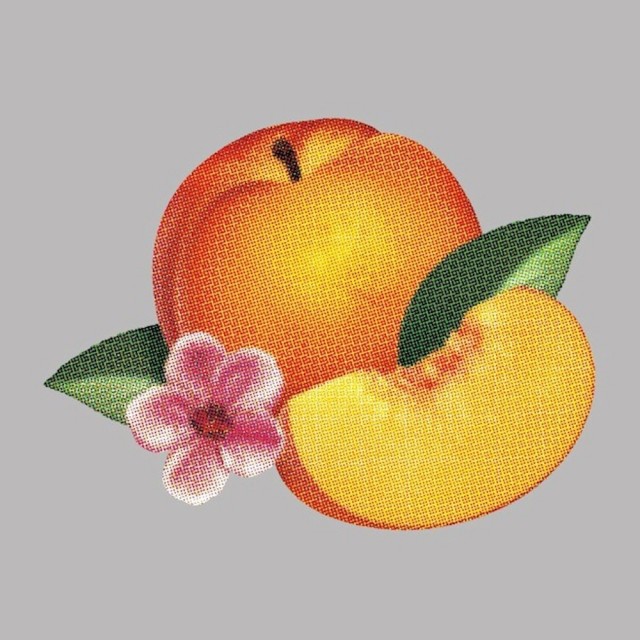
With the follow up to their terrific "Wolfgang Amadeus Phoenix" (released May 25, 2009), the French band does not mess with the formula terribly much and this time, that familiarity is definitely not a bad thing at all. "Bankrupt!" is an album completely designed for a glorious Spring day, the very kind that is warm enough to open your car windows and allow the music to have the air with which is can travel valiantly to the masses. The updated New Wave sound provides completely infectious pop bliss on tracks like "S.O.S. In Bel Air," "Entertainment," "Don't," "Oblique" and the slinky "Trying To Be Cool." But Phoenix still finds the time to experiment with some art rock sounds smack dab in the middle of the album with the nearly seven minute title track that would not sound out of place on a Tangerine Dream album. 

5. "PRISONER OF CONSCIOUS"
TALIB KWELI
Executive Producers:
Released May 7, 2013
Hip Hop has been dangerously stagnated for far too long with its cartoon depictions inner city life, violence, sexism, racism and over reliance upon all things "bling." So when Talib Kweli releases new material, it is time to perk our collective ears in his direction. "Prisoner Of Conscious" finds Kweli urging listeners to expand their horizons and musically, he delivers just that with an album that pushes some sonic boundaries much like The Roots accomplished on their game changing concept album "Undun" (released December 2, 2011). I especially enjoyed the orchestrated opener "Human Mic," the Marvin Gaye influenced ballad "Come Here," the rock tinged "Delicate Flowers," the warmly lush keyboards that augment "Favela Love," Kweli's collaboration with Seu Jorge and the closing socio-political uprising contained in "It Only Gets Better." 

Stay tuned to this station and blogsite for more updates from the DJ!

Friday, June 21, 2013

WSPC'S FIRST LISTEN AND IMPRESSIONS: "YEEZUS" KANYE WEST

"YEEZUS"
KANYE WEST
Executive Producers: Kanye West and Rick Rubin
Released June 18, 2013

It seems fitting to follow the previous piece celebrating Stevie Wonder with this new posting giving you my first impressions of the sixth album from music and pop culture ultimate enfant terrible, Kanye West because he once said concerning Wonder and his own artistic pursuits, goals and plans, "I'm not trying to compete with what's out there right now. I'm really trying to compete with Innervisions and Songs In The Key Of Life. It sounds musically blasphemous to say something like that, but why not set that as your bar?" If you have never seen that statement from West before now, perhaps that can shed some light over what he has been attempting to do artistically for the entirety of his career thus far and additionally, maybe it can shift the focus to the work instead of his outlandish public antics and voluminous arrogance.

While I woud not suggest that Kanye West has created some of the best album ever made like Stevie Wonder has done, I will say that West has truly created a staggering body of work where each album he has released contains its own theme, sonic palate and vision that is independent from the other albums in his ouvre, and frankly, they are defiantly independent from the remainder of hip-hop itself. It is as if, we are taking a trip to Ye's ever expanding personal museum and each album release is like a stand alone painting on the wall. With that, all of his albums work and flow together to essentially tell Ye's ongoing tale and explore his mental state as well. If "The College Dropout" (released February 10, 2004) showcased a young artist swinging for the fences with his one shot at bat, "Late Registration" (released August 30, 2005) signaled his full arrival into the big leagues. The late night synthetic textures of "Graduation" (released September 11, 2007) threw us into the deep and increasingly dark side of success, while the surprising musical curve ball "808s And Heartbreaks" (released November 24, 2008) depicted the crash, burn and aftermath of a broken soul. "My Beautiful Dark Twisted Fantasy" (released November 22, 2010) lived up to its title in an especially profane and epic fashion while "Watch The Throne"  (released August 8, 2011), his collaboration with Jay-Z served as a wildly enthusiastic victory lap of an album. And now, we reach his latest album "Yeezus," a radical U-turn of an album, which by the sounds of it, the mind of Kanye West is a frightening place to be.

As of this writing, I have listened to "Yeezus" nearly four times and I have to say that for an individual who is at the forefront of modern popular culture, he has released a work that unapologetically and unrepentantly flies completely away from anything resembling the mainstream. As you can see from the photo posted above, the album possesses no cover and no artwork. There are no liner notes (but you can find them on-line) and there are no decorative treatments in any way. As for the music itself, I honestly cannot hear even one potential single from it and I honestly do not think that one could be re-created from what exists within the album's 10 tracks. "Yeezus" is easily the darkest, hardest, most ferocious, abrasive, raging album from Kanye West to date. It is a complete 180 degree turn from "My Beautiful Dark Twisted Fantasy" as the briskly paced (the album is only a few seconds over 40 minutes) and razor sharp focused "Yeezus" is ferociously minimalist and metallic, where "Fantasy" was drenched in excess and opulence.

The sonic twists and turns of this LOUD album constantly keep the listener off guard as tempo shifts, false endings, jarring interruptions are whiplash inducing. The music primarily consists of drums (on the album, West proclaims that his "new movement" will be led percussively) augmented by a barrage of synthetic squeaks, howls, alarms and on the astonishing "I Am A God," the album descends into nightmare as the track is interjected with West's night terror screams and breathless panting. Only by three of the album's later tracks ("Guilt Trip," "Blood On The Leaves" and "Bound 2") do we even approach anything that sounds remotely melodic as the broken robotic auto-tune singing from "808s And Heartbreak" makes a return. Even so, the effect is no less disturbing than anything else on this rancorous album.

While the sonics of "Yeezus" are startling, the lyrics...well...

Yes, there will be much to pour over and debate with tracks like "Black Skinhead" and "New Slaves," and I really want to find the connections between the tracks, especially as "New Slaves" makes reference to "blood on the leaves," mirroring a later track of the same name. But the majority of the album's lyrical content is aggressively and shamelessly vulgar, sophomoric, scatological, crude, puerile, flat out nasty and truth be told, tiring to the point of exhaustion. Yes, West's head spinning wordplay has not lost its skillful power (and shocking humor) but the subject matter of all of his excesses, from money to sexual conquests to his sheer megalomania, was wearying to me and made me wonder and worry that he had just run out of subjects to make music about. But not so fast...

While the albums within Kanye West's body of work so far have all existed as complete, individual statements, all of the albums flow together as they have played off of each other in regards to themes and even West's artistic progression. Remember the track "Runaway," the elegant, prog-rock influenced nine minute epic from "My Beautiful Dark Twisted Fantasy" on which he warned all of us to get as far, far away from him as possible as he is nothing but the worst of damaged goods? This is an example of West's cunning and conceptual cleverness as he is ahead of the curve enough to make his albums essentially critic proof--for there is absolutely nothing that anyone can say about him that he has not and will not say about himself on his own albums. And West has been considerably and mercilessly self-lacerating time and again.

That said, and for any complaints and distaste towards his lyrics or really anything within "Yeezus," no one can say that he didn't warn us. West even taunts the listener on another track where he chides how much we like it when he is out of control, a statement of which there is more than a little bit of truth. The public has been simultaneously attracted to and repulsed by Kanye West for years now and if we were really so very disgusted by his raging antics, he would have rejected him long ago. But we haven't, we're still buying and we only have ourselves to blame if we do complain.

Even so, it cannot mean that we cannot make observations and remarks bathed in constructive criticism. I have to say that as much as I was riveted by the sound of "Yeezus," I did miss the relative soulful warmth of his first three albums. But, again West is much savvier than he is given credit for. If you do pay attention to the lyrics and sonic delivery, you can hear how each Kanye West album is inching closer and closer to more synthetic textures, possibly mirroring West's emotional state, which I am reading as harder, colder, more entrenched against potential pain. Just think about "808s And Heartbreaks" and how perfect that merging of studio wizardry, lyrical content and the reality of West's life at that time (the passing of his beloved Mother and the end of his longtime relationship) actually was. The auto-tune was utilized so artistically (and I still feel...brilliantly) and it reflected a vulnerability that I think rapping would otherwise cloak. But like the ghost of Obi-Wan Kenobi explained to Luke Skywalker concerning the soul of Darth Vader, the former Anakin Skywalker, "He's more machine than man now."

Maybe the iron clad harshness of "Yeezus" is where Kanye West is at this stage of his life, robotically zooming through an existence of mass excess and to what end and to obviously outrun what? If any answers are to be found in "Yeezus," that is for us to discover.

But now I must warn you...it is not going to be a comfortable journey.

Wednesday, June 19, 2013

WSPC'S BLACK MUSIC MONTH TRIBUTE #2: THE ART OF THE ALBUM AND THE EUPHORIA OF STEVIE WONDER

     "Well, the reality is, black music is all of it. Because basically, you have black people who sing country, like Charley Pride, and in classical, like Wynton Marsalis. You've got Leontyne Prince. You got Miles Davis, Jimi Hendrix, you've got--come on, what can I say? You've got the aborigines, who basically sing country as well. You've got everything. And it's only natural that it's that way, in that we are the first known civilization on earth. Black culture was the first.
     As long as a person respects and appreciates their culture, that's all you can ask of them. But when you know that something can work and feels right 'cause it's good, and somebody says no, I won't do it because it's white, or I won't do it because it's black, they got a problem in their own heads. It is not a problem in my keyboards."
  -STEVIE WONDER, from a May 1988 interview in Musician magazine

On May 13, 1950, Steveland Hardaway Judkins, whom 11 years later would be known to the universe as Stevie Wonder, entered the world. And yet, it feels as if there has never been a time when he was not a part of the world. Logically, I do understand how Stevie Wonder was not always a part of the world and one day, he will again not be. But, much like my parents, and the sun and the sky itself, Stevie Wonder has always felt to me to be so ever present, so permanent, so always, that I cannot even begin comprehend a time when the world will ever be without him.

Very recently, I returned to my parent's home to visit my Father who has been enduring the unfortunate up and down cycle of ailing, recovering, ailing and recovering once more. During a lull when he was resting (and also to escape the stifling level of heat in the home due to my Father, now much more frail than when I was younger, who constantly experiences feeling chilled or even cold no matter the actual temperature), I retired to the basement, much as I did during my upbringing, for solitude. This time, more than any other, I began to recognize the connections between my Father and myself in regards to our passionate love of music. For him, mostly, it is through the art form of jazz but throughout his stacks of meticulously organized vinyl, you can find all sorts of artists and most certainly, you will be able to find several albums by Stevie Wonder.

As I look backwards, I realize that it was Stevie Wonder who first taught me how to indulge myself within the art of the album, an art I feel that has never truly been appreciated as art and certainly not now as albums aren't being purchased as they once were. Before Stevie Wonder, there had been some experiences with recorded music that has burrowed their way into my musical being. Elton John's "Goodbye Yellow Brick Road" (released October 5, 1973) was one that captured me at an extremely early age. Fleetwood Mac's "Rumours" (released February 4, 1977) and The Eagles "Their Greatest Hits (1971-1975)" (released February 17, 1976), which my family had on 8 track, played endlessly in the car wherever and whenever we traveled. And once I embraced The Beatles along with Queen and Electric Light Orchestra, I listened to and explored albums to often obsessive levels. But, as I think about it even more, and especially during our over-stimulated and extremely accelerated times, the art of the album, where the entire experience was nothing more than the act of listening, was a gift given to me by Stevie Wonder.

I remember countless days and nights laying sprawled on the floor of my parent's basement listening to Stevie Wonder's  magnum opus "Songs In The Key Of Life" (released September 28, 1976), a double album with accompanying four track EP entitled "A Something's Extra," reading the giant 24 page booklet that was essentially a libretto, and doing absolutely nothing else but what I had just described.
"Songs In The Key Of Life"-My Father's personal copy

I could listen all afternoon. I could listen all night. I could listen, listen, listen and ask for nothing more for the Wonder's music satiated me so completely. Could we have that experience today? And furthermore, is there music of this seismic quality being made today that would captivate and hold us enraptured so tightly and warmly for such and extended period of time in the first place? I'm not sure.

Look...there will always be great music and there will always be terrible music. But the music that Stevie Wonder has given to us is of the rarest quality. Please do take some time as you read this to slow down and just think of the musical legacy of Stevie Wonder and remember how his voice, so empathetic and so athletic, makes you feel. How his songwriting, production, musical virtuosity and artistic independence made music for the ages, transcending every musical genre and racial barrier. Stevie Wonder is not a figure to solely celebrate during Black Music Month. Steve Wonder is an artist to be celebrated for each and every day we are able to wake up, rise and breathe due to his art, artistry, political activism, adherence to social justice, and utopian vision of humanity for all. We are so much better for having him.

For the purposes of this posting, I have a request to make of you, especially for those of you who have come of age in the music downloading era. I want for all of you reading to carve out some time to just...listen. I insist that you find any album from what is widely considered to be his classic period, the stage at which he was fully emancipated from the Motown formula and was able to let his musical soul wander, roam and invigorate all who chose to listen. Find "Music Of My Mind" (released March 3, 1972) or "Talking Book" (released October 28, 1972)...
 
...or find "Innervisions" (released August 3, 1973) or "Fulfillingness' First Finale" (released July 22, 1974)...
  
...or the aforementioned "Songs In The Key Of Life" or even the avant garde, mostly instrumental and synthetically symphonic double album "Journey Through The Secret Life Of Plants" (released October 30, 1979)...
  
...and just LISTEN!!!! 

Do not turn on your television. Do not go on-line. Do not have any other stimuli in front of you other than the artifacts contained within the album itself, from the artwork, jacket, lyric sheet, liner notes and just LISTEN!!! And then, as you listen, then see where the music takes you!

Maybe this is a conceptual stretch but I am going to try and reach for it regardless. I am wondering if perhaps through Stevie Wonder's blindness and being unable to connect to visual stimuli in the same way as myself and other seeing people, that his connection to the music itself is just that much more powerful and unfiltered. I cannot help but to ponder what vistas he has and continues to experience once he places his hands upon the piano, keyboards, synthesizers or grabs a pair of drum sticks to bash away. What does he "see" when he creates?

I know that whenever I have listened to Stevie Wonder's music, what I hear is a connection to music so pure and untainted that I feel that we are tapping into euphoria itself. I feel that when I hear Stevie Wonder's music, I am hearing not only the best of himself but the best of what we, as human beings, can possibly be if we only allowed ourselves to soar so highly. For Black Music Month, and for all time, I celebrate one of the greatest that we have ever been blessed to have. Stevie Wonder is a musical monument. This towering musical figure, who, as far as I am concerned, made some of the best albums ever created is deserving of the fullest of our attention for if we give his music that commitment, maybe we just may be able to see what he "sees."

And in doing so, the world will never, ever be without him.

Saturday, June 15, 2013

FROM THE WSPC LIBRARY: "PINK WORLD" PLANET P. PROJECT (1984)

"PINK WORLD"
PLANET P. PROJECT
Music and Lyrics by Tony Carey
Arranged by Tony Carey and Peter Hauke
Produced by Peter Hauke
Released in 1984/Re-Released in 2008

Throughout my entire life of listening to and immersing myself within music, I have always been enthralled with music's exploratory spirit and sense of possibility. There are the types of music that I just naturally respond to joyously but I am always on the lookout for something new, something fresh, something unlike anything else that I have heard before, something that can sit proudly and confidently within its own musical universe. I love the journey. I love the peaks and valleys. I love listening to music and having the feeling that I have been transported and therefore transformed. Going against the grain of many fans, critics, and journalists of rock music, I have held a lifelong penchant for double albums, concept albums, rock operas and works of that nature as all of those types of musical works fly against any preconceived notions of what music can and cannot be and always point to where music can potentially go.

With my mythical radio station WSPC, I feel compelled to share with you the music and artists that have meant to absolute most to me throughout my life, especially the ones who I assume may be arcane to many of you. At this time, I feel most compelled to spend time celebrating, and I would imagine, introducing you to an artist whose seismic gifts as a singer/songwriter/producer/multi-instrumentalist are unquestionably powerful. And no matter how many times I write and speak to you about my personal musical "Holy Trinity" of The Beatles, Prince and Todd Rundgren, this particular musical artist rests confidently and firmly within the upper echelon of my most favorite musicians of all time. The artist's name is Tony Carey.

After departing from his role as a keyboardist in the band Rainbow, Tony Carey has spent the past 30 plus years (and still counting) recording, touring and releasing solo music which partially consists of bittersweet ballads and the kind of stunningly well crafted pop songs that are in shockingly short supply these days, the very kind of pop song that you could listen to on repeat, never tire of and always find musical bliss (his track "Love Don't Bother Me" from 1985 is precisely that kind of song for me). His musicianship is formidable as Carey is one of those ever mystifying figures to me: the multi-instrumentalist who creates albums entirely by themselves, where every single sound springs from his musical being.

But the area in which Tony Carey is a veritable master is within the art of the story song. Tony Carey is an exquisite, evocative and exemplary storyteller. His fables, parables and mostly, his character portraits of figures who are either down on their luck, eternal losers, or figures who live their lives on the fringes of society, if not altogether off the grid, are so skilled and presented through an incredible economy of perfectly chosen and stitched together words that his albums tend to feel less like rock and roll and more like pieces of literature. Even with songwriters as extraordinary as Roger Waters and Pete Townshend, who each bear the titanic gifts, I still tend to think of those artists as lyricists whereas Tony Carey stands so tall and unique, to my ears, I really believe that if he wished, he could have an additional artistic outlet as a novelist. For example, astute listeners may remember his hit song "A Fine, Fine Day" from his album "Some Tough City" (released in 1984).

What brings me to this latest Synesthesia posting for you (as well as myself) is an album that was actually not released under his own name. You see, dear listeners, Tony Carey, while releasing albums under his own name, also issued albums under the pseudonym of Planet P. Project, a "band" that was more electronic, keyboard/synthesizer dominated and dark science-fiction styled themes carried the storytelling rather than his decidedly more Earthbound and gritty solo material, and astute listeners may even remember the track "Why Me?" from the self titled debut album released in 1982. Like the very best of science-fiction, Carey's Planet P. Project identity allowed him the greater opportunity to hold up a mirror to society and our overall humanity in ways that were as disturbingly surreal as they were politically and even spiritually provocative.

"Pink World," the second album from Planet P. Project, is a four sided concept album filed with religious allegory and baby boomer nuclear nightmares and it is a work that has sustained me on a near primal level for nearly 30 years. I discovered the album when I was 16 years old in 1985, after reading an interview with Tony Carey in Keyboard magazine. The article's comparisons of "Pink World" to the music of Pink Floyd was selling point enough for me and after some serious hunting and seeking, I found the album in a record store on the very same day that I went out to see Director George Miller's "Mad Max Beyond Thunderdome" (1985)--and as I think about that time now, I have to wonder what nihilistic fantasies and fears had I been housing (as I was also a drummer in my teenage rock band "Ground Zero," complete with mushroom cloud illustrated band T-shirts)?

"Pink World" tells the story of a seven year old boy named Artemis who makes the grave mistake of playing in the woods and drinking chemically polluted water from a "little nothing river" located behind a "little lonely factory" that makes household goods. Despite the adult warnings ("You drank the water?!/There's nothing we can do! There's no one we can call!"), Artie's impulsive act robs him of the power of speech but he is then given psychic abilities ("I could see into the future/ I could hear what the people think/I saw visions in my head/I saw things I should not see") and he is ultimately remade into an immortal being who never ages ("Well, I guess I'm gonna live forever/Find myself a cave and hide me away").

Meanwhile, the world is on the brink of nuclear holocaust, and with an unprecedented certainty. Artie and his powers are soon discovered and being seen as a messiah, he is then implored to save humanity from annihilation. Artie complies by creating a pink tinged barrier of infinite height and depth that indeed saves humanity from the falling bombs, cruise missiles and acid rain. Yet inside "The Zone," after the nuclear fallout, "Pink World" then spends its second half in a horrific dystopian, Orwellian landscape where life "inside the fishbowl" is one of never ending surveillance, rampant fundamentalism and vicious totalitarianism, a world where "the one we owe it all to's only seven years old."

This is as much of the storyline that I feel compelled to share with you as I wish for you to experience "Pink World" for yourselves, just as I did. Yes, there are shades of Pink Floyd here and certainly The Who's "Tommy" (released May 23, 1969) there but for me, Planet P. Project's bone chilling album sits very comfortably alongside The Kinks' "Preservation Act 1" (released November 16, 1973) and "Preservation Act 2" (released May 8, 1974) and more recently Nine Inch Nails' "Year Zero" (released April 17, 2007), while also standing firmly in its own musical universe as it is unlike so much of anything else that you will hear.

Musically, all of the performances on this album (aside from some key contributions from a small list of studio musicians), are delivered by Planet P. Project's one man band, Tony Carey. The album is awash in atmospheric, synthetic textures that are occasionally blasted apart by rock guitars, rumbling bass and nearly martial drumming at times. Holding everything together is the sound of Tony Carey's rich and raspy voice who so successfully voices the thoughts of little Artemis as well as a host of other characters through his wry, observational, sometimes ironic, sometimes matter-of-fact yet ALWAYS direct lyrics. As poetic and as visual as Carey is (I especially love his metaphor for the oncoming destruction, "it rolls like an avalanche and it will sweep you away.") the those who do not care for concept albums have no reason to fear that "Pink World" would fly off into an esoteric musical headspace akin to the furthest reaches made by Yes or 1970s King Crimson. I think that "Pink World" is more than accessible while also being one brooding, haunting experience because Tony Carey has so heroically written some damn good songs.  

"To Live Forever" effortlessly sets the sinister stage for Artie's destiny and everything else to follow over the course of the album's four sides (or the CD's 79 minute running time). "What I See," is a menacing ride with dangerously chugging guitars, pulsating drums and almost spectral backing harmony vocals as we walk  through Artie's terrifying future visions as he is plagued by nuclear nightmares ("I see a planet that's glowing red/I see the millions burning in their beds/I see the beauty that might have been/ Torn from the future by hungry men"). Slower, moodier tracks like "The Stranger," "The Shepherd," and "A Letter From The Shelter" all work beautifully to establish the album and story's emotional core of humanity's respective states of seeking spiritual deliverance, desperate hopes to find a savior to rescue us all from destruction and also humanity's collective sorrow with the extinguished nature of free will.

"A Boy Who Can't Talk Part 1" is the track that immediately sounds like a cross between Pink Floyd's "Pigs On The Wing" and "Mother," yet this track serves to create the emotional core of Artemis himself as society pleads for him, pulls for him and ultimately deifies him ("And you'd like to say 'Leave me alone! Would you all get away!'"). "This Perfect Place," "What Artie Knows," and "In the Zone" are rock solid as they create a triple hard rock sucker punch detailing the consequences of humanity's greatest wishes for Artie to deliver. And somehow, my favorite track on the album is an instrumental!! "March Of the Artemites" (whose acoustic guitar phrases suggest The Hollies' "Bus Stop" to me) contains layers and layers of sounds envisioning an already unbearable future world going even more horribly wrong.

And through this plot driven album, I have to again say that Tony Carey's stroytelling skills are brilliant as the actual plotting of the album is akin to a thriller (Perhaps "Pink World" did play a part in the creation of Stephen King's novel Under The Dome, as Carey has joked). The first two sides are tension filled and possessed with an unrelenting creeping doom which concludes with the inevitable apocalypse. The album's third and fourth sides are decidedly less plot driven and more ghostly, as Carey's writing feels and remains visual enough yet purposefully vague, so as to having the listener to create their own interpretation for what is exactly happening within the story and most specifically the goings on within  "The Zone" and Artie's ultimate fate.

Now dear readers and listeners, there is another piece to this whole story that I have just been itching to tell you about but I will do my very best to refrain from divulging the complete details as I wish for you to experience thias album for yourselves without much interference from me. On a couple of occassions, I have had the extreme pleasure of being able to correspond a little bit with the man himself, Mr. Tony Carey, though his website and his Facebook page. Needless to say, I was excited beyond any words I could acutally wrtie to you as I was able to ask a longtime musical hero some long burning questions about the "Pink World" narrative, to which he supplied a series of unprecedented detailed answers. ("You've coaxed the first-ever inteview out of me re: 'Pink World'," he joked)

What I do feel comfortable sharing with you is one thing he mentioned that just may assist you with getting into the album for the first time or even enhancing it more than ever for fans like myself. When you do listen to the album, Tony Carey suggested that we all keep the following concept in mind:

"Think of the WORST possible thing you could be, which is somebody else's savior."

Taking that cue, the journey of Artemis and human kind throughout "Pink World" is explored not simply as a parable or even as a cautionary tale but as a socio-political mirror that to me, feels especially prevelant in 2013 as we are just overrun with politicians decimating humanity in the name of God or better yet, how they have chosen to interpret the word of God. "Pink World" asks us to think about what happens when one deifies another or utilizes a deity for the purpose of power, control and the subjugation of others? The album asks us to think about what happens when that deity is militarized and worship becomes fascism?

I think that the album is also an exploration of  free will vs. destiny as "Pink World" just may be warning us to be careful for what we wish for...even if humanity is facing down oblivion. What if the album is suggesting that perhaps humanity is just destined to meet its end and by having Artie interfere with this potential cataclysmic outcome, humanity, in turn, is faced with a world where free will itself is non-existent? Maybe it just would have been better to be wiped out of the universe.

Now I realize that all of this sounds like a heavy load to listen to. But I wish to assure you that "Pink World," while disturbing, is not an overwhelmingly depressing experience or a tumultuous slog to wade through. On the contrrary, the album flows wondrously due to the songs, the storytelling and Tony Carey's amazing voice which serves as the perfect guide to this grim future vision.

I think by now you have gathered how important this album is to me. No matter how much my music collection continues to grow, widen, deepen and diversify, Planet P. Project's "Pink World" is one of those rare albums that I return to consistently. At least twice a year, I find myself heading into my music library to dig out the album and eagerly take its chilling journey, emerging transformed all over again once reaching the other side. It is an album that I absolutely URGE you to find for yourselves if you have not already heard it. Yes, it is difficult to locate but if you search on Amazon or better yet, head on over to Tony Carey's website (www.tonycarey.comand you can purchase a copy for yourselves. If you are still unsure, just head over to You Tube where some anonymous individual has uploaded the full album so you may listen to it in its entirety--and with that, I just may post a link to it myself next month!

Regardless of how you do it, I sincerely hope that you do give this stellar album a chance. If you give yourself over to it, I believe that like the titular pink world itself, this album will roll like an avalanche and sweep all of you away.

Sunday, June 9, 2013

FROM THE DJ'S LISTENING BOOTH: THE ALBUMS OF 2013-PART ONE

1. "REGIONS OF LIGHT AND SOUND OF GOD"  
JIM JAMES
Music and Lyrics by Jim James
Produced by Jim James
Released February 5, 2013
The first new release I heard this year was the debut solo album by Jim James, lead singer/guitarist for the band My Morning Jacket. Unlike the wildly diverse sounds and high energy of his band's releases, James' solo work, while no less musically diverse as he offers snatches of rock, folk, funk and jazz elements into the mix, is quietly devotional. "Regions Of Light And Sound Of God" is music for a cloudy day, or an early morning or even a Sunday morning as James has crafted a song cycle that decidedly floats rather than rocks..and beautifully so.

2. "A LOVE SURREAL"
BILAL
Executive Producers Bilal Oliver with Shafiq Husayn 
Released February 26, 2013
The third (or fourth if you count his still unreleased "Love For Sale") release from idiosyncratic vocalist/songwriter/producer Bilal is, to my ears, his strongest and most focused album to date and also one of the finest albums of 2013 so far as his specialized brand of art-funk sprinkles in a taste of Marvin Gaye and Stevie Wonder and dashes of Prince, all the while continuing to firmly establish himself as an artist in his own right. Working in full collaboration with his band, Bilal's song cycle about the various stages and phases of love effortlessly stretches and switches from the soulful "Back To Love," to the druggy "Climbing," the jazz funk of "Winning Hand," the spooky slow burn of "Slipping Away" to the ethereal "Butterfly" (with keyboardist Robert Glasper) all the while placing Bilal's elastic vocals front and center.

3. "AMOK"
ATOMS FOR PEACE
Produced by Nigel Godrich
Released February 26, 2013
The lines between the acoustic and synthetic as well as the lines between Radiohead and Thom Yorke's extracurricular musical activities continues to blur with the release of "AMOK," the debut album from Yorke's new band which features Flea (bass guitar), Joey Waronker (drums), Mauro Refosco (percussion), producer Nigel Godrich (programming) alongside Yorke (vocals, guitars, keyboards, piano, programming). Like Yorke's solo release "The Eraser (released July 10, 2006) and the more electronic excursion by Radiohead, "AMOK" is awash in computerized textures and rhythms which sometimes suggest and betray the humans behind all of the sounds. Furthermore, the music often flies into undeniably African textures making this album feel as if you has wandered into some sweaty, subterranean nightclub.

4. "THE MESSENGER"
JOHNNY MARR
Produced by Johnny Marr
Released February 26, 2013
I often joke that when I was 15 or 16 or 17 years old, I LOVED The Smiths. And then, I turned 18.

My love/hate relationship with the beloved English band is easily split into two clean halves: I cannot connect whatsoever with the maudlin histrionics of vocalist/lyricist Morrissey but I am just in heaven with the actual musical and guitar soundscapes created by guitar hero Johnny Marr. 2013 saw the release of his debut solo album and it has quickly become one of my favorite albums of this year as his six string dreams create one spellbindingly hypnotic track after another. From the almost glam rock stomp of "Upstarts" and the snap and attack of "Lockdown," "The Right Thing Right," "The Messenger" and yes, "Word Starts Attack," it is within the shimmering waterfalls of "European Me" and "New Town Velocity" that simultaneously reminds fans of why we fell in love with his sound in the first place while also schooling new listeners just how the guitar can be utilized in endlessly creative ways.

5. "WELCOME OBLIVION"
HOW TO DESTROY ANGELS
Composed, Produced, Arranged, Programmed and Performed by How To Destroy Angels
Released March 5, 2013
The prolific musical output of Nine Inch Nails mastermind and Academy Award winning film composer Trent Reznor continues to grow with the release of "Welcome Oblivion," the debut full length album from his new band which features Reznor's wife Mariqueen Maandig on lead vocals alongside frequent Reznor collaborator Atticus Ross and art director Rob Sheridan. The resulting musical vision of How To Destroy Angels falls somewhere between the quieter Nails' material and Reznor and Ross' atmospheric film compositions as "Welcome Oblivion" weaves a chilly, darkly erotic spell for a tad over one hour of music. "Keep It Together" pulsates intensely and the album instrumental sections often recall the most sinister moments created by Tangerine Dream. For me, the almost poppy "How Long?" and the strikingly sparse "Ice Age," with what sounds like a lone banjo or a one stringed dobro plucking away on a drifting ice cap into a wintry fog, are the album's highest points and the ones I think could further establish HDA as a musical force independent of NIN.

Stay tuned for PART TWO!!!

Friday, June 7, 2013

WSPC'S BLACK MUSIC MONTH TRIBUTE #1: THE SECOND COMING OF PRINCE?


Written in honor of Prince Rogers Nelson's 55th birthday on June 7th.

Recently, I saw a quote from The Roots' justifiably celebrated drummer/bandleader Ahmir "?uestlove" Thompson as he described himself as a "Prince scholar." Dear listeners, I feel compelled to announce to you, and without any trace of arrogance (so please do not try to detect any as I assure you it is not present), That I am also a Prince scholar.

Earlier on Synesthesia, I expressed to you that my personal musical "Holy Trinity" consists of one third The Beatles, one third Todd Rundgren and for the final, crucial third, the artist always and forever known as Prince. As WSPC celebrates Black Music Month, I would be remiss if I did not spend some time honoring the individual who is one of those musicians of such rarity that he has essentially taken all that has come before him and like The Beatles and Todd Rundgren and other specialized musical artists, has essentially created his own musical language that every sound presented within a certain way or context can only be described as sounding like Prince. Additionally, June 7th will mark Prince's 55th birthday, a strange number for someone who has always seemed to be so ageless (even though he is obviously not leaping from piano tops anymore) and always in tune with his uncompromising musical spirit as he is consistently on the pursuit of something new. 

At this time, I do not want to entirely fixate upon where Prince has been as I really want to ruminate on where he possibly may beheaded. It seems as if something is brewing at Paisley Park, a rumbling of which we have not heard in quite a long, long time. For me and my musical sensibilities, the creative run that Prince demonstrated between the years of his debut album "For You" (released April 7, 1978) all the way though his untitled, unpronounceable "Symbol" album (released October 13, 1992) is one of the greatest musical runs I have ever heard. It was something akin to the prolific and astonishing output of The Beatles, Rundgren, David Bowie, Miles Davis, Joni Mitchell, Stevie Wonder and others of their creative ilk where musical boundaries were challenged, broken, re-contexualized and revolutionized over and over and over again. It was like Prince was re-inventing the wheel with every new release and due to how quickly and constantly he worked, by the time he did release a new album, he was already at work on the next one, as well as a slew of B-side singles, side projects (like The Time, Vanity 6, The Family), material created for other artists, material created under pseudonyms (Madhouse) and then there's his vault of ever increasing unreleased songs. No matter what he was doing, Prince was forever remaining completely ahead of the curve. 

In my post celebrating the 46 anniversary of the release of The Beatles' "Sgt. Pepper's Lonely Hearts Club Band" (released June 1, 1967), I expressed how I wished that I had been able to have experienced that particular album when it was first released. In the case of Todd Rundgren, I was also born a tad too late to have had that cultural first impression of his classic and stunning run of albums during the 1970s. But, with Prince, I was right on time! 

Like so many of you, my mind was blown with the release of "Purple Rain" (released June 25, 1984). The album and Director Albert Magnoli's explosive film completely converted me, as I just could not stand him before I stepped into the long defunct Evergreen Park theater during that long ago summer night when I was 15 years old. Not only did I wear that album out (so much so that I haven't listened to it in years and years), I grew obsessed with "1999" (released October 27, 1982), with its elongated, darkly synthetic textures. I purchased every new album from that point on immediately, scratching my head increasingly as I tried to figure out where he was coming from. How intoxicating and unlike anything else taking this specific musical journey was, as some of my fondest musical memories rest within sitting in my parents' basement, drum sticks in hand and dreaming away to whatever musical stratospheres Prince wanted to take me to. 

Since his incredible run, Prince's has taken some increasingly difficult twists and turns. Of course, there was the time in 1993, when he pronounced himself "dead," which then sprouted the politically/spiritually influenced period when he wore the word "Slave" upon his face during his bitter battle with Warner Brothers, his former record label. Hit singles eluded him despite the fact that great music was still being created. With the arrival of the internet, Prince has had a long conflicted relationship with the medium as personal websites and on-line music clubs have opened and closed to mounting fan frustration (including mine). 

Even the prolific nature of his album releases began to slow down, hit singles evaporated and the creative greatness seemed to become more sporadic. For every complex and challenging release like the three disc/three hour album "Emancipation" (released November 19, 1996), the vault collection "Crystal Ball" (March 3, 1998) and the religious fundamentalist fueled concept album "The Rainbow Children" (released November 20, 2001), the once ferocious quality control seemed to dissipate with decent but unremarkable albums like "3121" (released March 21, 2006) and "Planet Earth" (released July 15, 2007). His last album "20Ten' (released July 10, 2010), given away for free in a bundle with European Sunday newspapers, was never even released in the United States. 

Granted, Prince's musical legacy is completely secure. He is one of those rare artists who has done it all and then some and truly has absolutely, positively, undeniably nothing left to prove to anyone. He doesn't have to musically re-invent the wheel anymore and I couldn't even begin to blame him if he never wanted to climb that mountain again. But all of that being said, you can never, ever completely count His Royal Badness out.

During some stages within these last ten years or so behind the "purple curtain," it seems as if Prince's best music has occurred just when it seemed that no one was looking or listening. In 2001, Prince's brief on-line music club contained albums worth of music (including songs like "The Daisy Chain," "Golden Parachute," "2045 Radical Man," "Judas Smile," "Gamillah," and "Y Should Eye Do That When Eye Can Do This?") that, I think, would have easily continued to make the public's and critic's collective heads spin in circles. There was a 26 minute Gil Scott-Heron sounding epic released in 1998 entitled "The War" that would have blown everyone's minds. In 2007 and 2011, respectively he released two internet singles entitled "F.U.N.K." and "Extralovable" that, frankly were better than most of his recent full albums. Like the music from his wonderful first decade and change, Prince operated, at that time, as if he hadn't a care in the world with musical trends or even with whatever anyone thought of anything he composed, recorded and released. The sheer audacity and brilliance of the music would speak for itself. Songs and albums just seemed to appear out of the ether, fully formed and delivered like musical curve balls and he dared us to keep up with him the entire way. I am having a feeling (and I am hoping, hoping, hoping) that he just may be gearing up to blow us all away all over again.

2013 has seen a small handful of new Prince material mysteriously arrived upon a new website located at www.3rdeyegirl.com. Shortly thereafter, it was revealed that Prince had also formed a new all female band with the moniker "3rd Eye Girl," consisting of Hannah Ford (drums/vocals), Ida Nielsen (bass guitar,vocals) and a ferocious six string shredder, Donna Gratis (guitars, vocals). The group has recently completed an extremely well received tour of the West Coast this Spring and also gave a pulverizing performance on the Billboard Music Awards telecast that included a Led Zeppelin sounding remake of his signature rave up "Let's Go Crazy." 


But, what of the new songs? Well, I am quite excited, dear listeners. Very excited! For the first time in many, many years, I have been snapped to attention by new Prince music and I have played the songs on repeat in my car so often this year, the music has made me anxiously anticipate new material in a way I have not felt in far too terribly long. In short, the new songs remind me very much of his classic material.  

Not before any of you out there happen to get a bit carried away, I must explain that previous statement. It is not as if the new songs remotely sound like his classic material but the new songs feel to me as if they were all carved from the same musical spirit, the one where he would lock himself away from the world and just...create. The songs are all complex, yet fully accessible. They are tightly written and melodically top shelf while always leaving room for audible surprises that just tickle the eardrums. Nothing meanders, feels out of place or even superfluous. It feels as if Prince's songwriting skills have re-sharpened and re-focused and they are all more than ready to re-engage with everyone who chooses to listen.

The story song "Rock And Roll Love Affair" and the rough and raw "Screwdriver" (performed with 3rd Eye Girl) are two selections that feel very familiar, but in the best possible way. Prince is not repeating himself but has somehow discovered a way to take the feel of the past yet make it sound as if the songs could not possibly happen other than right at this point in time. The horn driven pop/soul of "Boyfriend" is described as being a demo version, thus again showing how Prince's supposedly unfinished songs are better than most artists' complete albums! "Live Out Loud," a garage rock song of positivity and affirmation places 3rd Eye Girl firmly at the forefront with Prince contributing guitar and backing vocals only and the most recently released single "FixUrLifeUp" defiantly showcases the four piece band as musical soldiers in lockstep as they blaze through a hard charging groove with walloping drums by Ford. 

My personal favorites are the dreamy solo acoustic track "That Girl Thang," which demonstrates that Prince's spellbinding falsetto and stunning nimble guitar work have not diminished even a minuscule while he has increased with age. But the lusty, frisky, jazzy and damn fonky "Breakfast Can Wait," with Prince's syncopated vocals, warm keyboards, bob and weave guitars, bass and drums and sonics that truly just made me laugh out loud in amazement, is the song that has become my go-to track every time I slide the CD into the player. 

And so...here we are on June 7th, Prince's 55th birthday with a new band, a highly regarded recent tour, new music and just last week, the announcement arrived that he has just signed a deal with Kobalt Label Services to market and distribute new music produced by himself as well as new Prince material, all the while retaining control of all master recordings, the main point of contention between himself and Warner Brothers. 

At the beginning of this year, Prince teased his fan base that 2013 would be a special year, which did elicit understandable scoffs from those who have felt burned in the past. Even I, the "Prince scholar" felt extremely skeptical. but, it seems that the signs are indeed pointing towards something special. Let's hope that Prince's birthday and new year of his life brings a bounty of musical gifts for all of us.


HAPPY BIRTHDAY, PRINCE!!!!!